 Log In





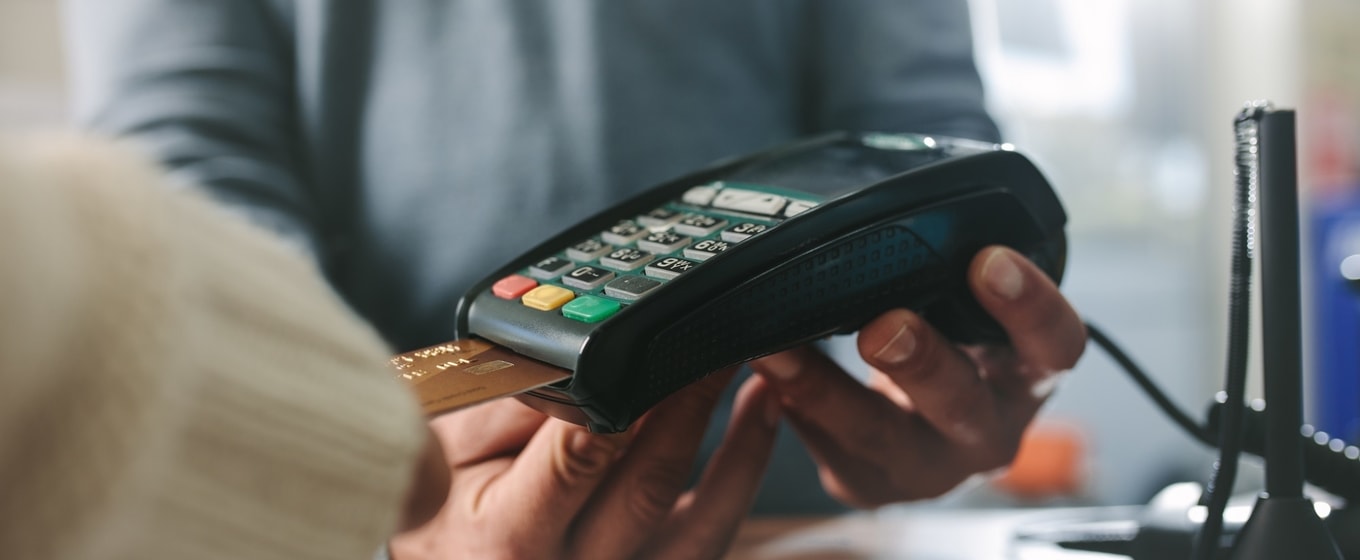
Card payments are no longer a “nice to have” for small businesses – they’re expected.
Customers increasingly prefer to pay by debit card, credit card, or mobile wallet. Whether you're running a café, offering services, or selling online, the ability to accept card payments can directly impact your sales.
The good news is that taking card payments is easier and more affordable than ever. You no longer need long contracts, expensive terminals, or complicated bank agreements.
This guide explains how to accept card payments as a small business, the different options available, how much it costs, and how to choose the right setup for your needs.
How to accept card payments as a small business
To start taking card payments, you typically need three things:
- A merchant account (where your funds are temporarily held)
- A payment processor (the company that handles transactions)
- Hardware or software to take the payment (such as a card reader, POS system (point-of-sale system), online gateway (a way to take payments on your website), or a payment app on your smartphone.)
Many modern providers bundle all three together. This means you can sign up online and start taking payments within a few days – sometimes even the same day.
Once you’re set up, payments usually follow this process:
- Customer taps, inserts, or enters their card details
- Payment is authorised by their bank
- Funds are processed by your provider
- Money is transferred to your business bank account (typically within 1–3 days)
You can accept card payments in three main ways: in person, online, or remotely (phone/invoice). The best option depends on how your business operates.
Choosing the right card payment services
Different types of card payment services suit different businesses – here’s how they compare.
Mobile card readers (best for micro-SMEs)
Mobile card readers connect to your phone or tablet and allow you to accept payments anywhere. They’re popular with:
- Tradespeople
- Market stall sellers
- Freelancers
- Mobile businesses
- Pop-up shops
Benefits include:
- Low upfront cost
- No long-term contracts
- Portable and easy to use
- Quick setup
This is often the simplest way to start accepting credit card payments for small businesses.
Integrated POS systems (best for retail and hospitality)
Point-of-sale (POS) systems combine card payments with:
- Inventory management
- Sales tracking
- Receipts
- Staff management
- Reporting
They’re ideal for:
- Shops
- Restaurants
- Salons
- Hospitality venues
While more expensive upfront, POS systems provide deeper business insights and streamline operations.
Online payment gateways (best for e-commerce)
If you sell online, you’ll need a payment gateway that integrates with your website.
This allows customers to:
- Pay by card
- Use digital wallets
- Complete secure checkout
Online gateways work with:
- E-commerce stores
- Booking systems
- Subscription services
- Invoice payments
Many businesses combine online and in-person payments for flexibility.
Tap to Pay apps (best for nano businesses and sole traders)
Using a free app from providers like SumUp or Square, you can turn your smartphone into a card reader – without any extra hardware. Customers simply tap their card or device against your phone to pay.
This suits:
- Sole traders
- Casual sellers
- Market traders who want a hardware-free backup
- Anyone just starting out
Benefits include:
- No upfront cost
- Nothing to carry or charge separately
- Quick to set up
- Works anywhere you have signal
It's worth noting that some mobile card reader providers (like SumUp) include Tap to Pay as a feature within their existing app, so you may already have access to it if you're signed up with them.


Enjoying this article?
Sign up to receive regular insights to your inbox.
The benefits of accepting credit card payments
If you’re still cash-only, accepting card payments can offer several advantages.
Higher average transaction values
Customers are twice as likely to spend more when paying by card than cash.
Faster checkout
Contactless payments speed up queues and improve customer experience.
Improved professionalism
Card acceptance can make your business look more established.
Better cash flow visibility
Digital payments automatically record transactions, making accounting easier.
Increased sales opportunities
You won’t lose customers who don’t carry cash.
For many small businesses, accepting card payments quickly pays for itself.
Understanding costs: Card payment fees in the UK
Card payment fees vary depending on provider and setup. The main costs can include:
- Transaction fee – A percentage per payment (typically 1%–2.5%).
- Hardware cost – One-off purchase or monthly rental.
- Monthly account fees – Some providers charge subscriptions.
- Payment gateway fees – For online transactions.
- PCI compliance fees – Security compliance requirements.
- Chargeback fees – If a customer disputes a payment.
The two main pricing models are:
- Flat-rate pricing: A single percentage for all transactions.
- Interchange-plus pricing: Separate fees based on card type and risk level. (This is often cheaper for higher volumes.)
Always check:
- Settlement time (how fast you receive funds)
- Contract length
- Minimum monthly fees
- Early termination charges
Comparing SME payment solutions
Here’s how some popular UK providers compare for small businesses.
Provider | Hardware cost | Transaction fee | Monthly fee | Best for |
Low | ~1.69% | No | Micro businesses | |
Low | ~1.75% | No | Retail and mobile | |
Low | ~1.75% | No | Small retailers | |
Traditional merchant bank | Higher | Lower (variable) | Often yes | High volume businesses |
Mobile-first providers are typically best for small businesses starting out. Traditional merchant accounts may offer lower fees but often involve contracts and higher setup costs.
5 steps to taking your first card payment
Ready to start? Here’s how to set up card payments quickly.
Step 1: Choose a provider
Compare pricing, features, and hardware options to pick one suited to your business type.
Step 2: Create your account
Sign up online – you’ll need to provide:
- Business details
- Bank account information
- Identity verification
Step 3: Order or set up hardware
If taking payments in person, you’ll receive a card reader or POS device.
For online payments, connect your payment gateway to your website.
Step 4: Test your setup
Run a small test payment to confirm everything is working correctly.
Step 5: Start taking payments
You’re ready to accept debit cards, credit cards, and contactless payments.
Most small businesses can complete this process in under a week.
Funding your new payment system
While mobile card readers are affordable, more advanced POS systems or multi-location setups can require upfront investment. That’s where funding can help.
You could consider:
- Equipment finance for POS hardware
- Working capital loans for system upgrades
- Merchant cash advances based on card sales
If you’re planning to upgrade your payment infrastructure, spreading the cost can protect cash flow while you grow.
Choosing the best card payments for your business
When deciding which card payment solution to use, consider:
- Where you sell (in-store, mobile, online)
- Average transaction size
- Monthly sales volume
- Budget for hardware
- Integration with accounting software
- Settlement speed
The right solution should make payments easy for both you and your customers.
Final thoughts
Taking card payments is now essential for most UK small businesses. Whether you choose a mobile reader, POS system, or online gateway, the right setup can improve customer experience and unlock more sales.
Modern providers have made it easier than ever to accept card payments without long contracts or large upfront costs.
Start simple, choose a solution that fits your business, and upgrade as you grow.
Need to upgrade your POS or invest in new equipment?
Apply for a small business loan in minutes and see what funding options are available.

Choosing the Best Payment Option for Your SME
— Read More — Choosing the Best Payment Option for Your SMEChoosing the Best Payment Option for Your SME
We explore the pros and cons of cash, card, and mobile payments to help you decide which payment options will work best for your business and customers

8 Key Factors for eCommerce Payment Processors
— Read More — 8 Key Factors for eCommerce Payment Processors8 Key Factors for eCommerce Payment Processors
Everything you need to know before choosing the right payment processor for your online store.

Common Financial Pitfalls & How to Avoid Them
— Read More — Common Financial Pitfalls & How to Avoid ThemCommon Financial Pitfalls & How to Avoid Them
Chris Woodard, Co-Founder of Handle.com, explores some of the biggest financial mistakes that new business owners make and how to avoid them


These cookies are set by a range of social media services that we have added to the site to enable you to share our content with your friends and networks. They are capable of tracking your browser across other sites and building up a profile of your interests. This may impact the content and messages you see on other websites you visit.
If you do not allow these cookies you may not be able to use or see these sharing tools.